

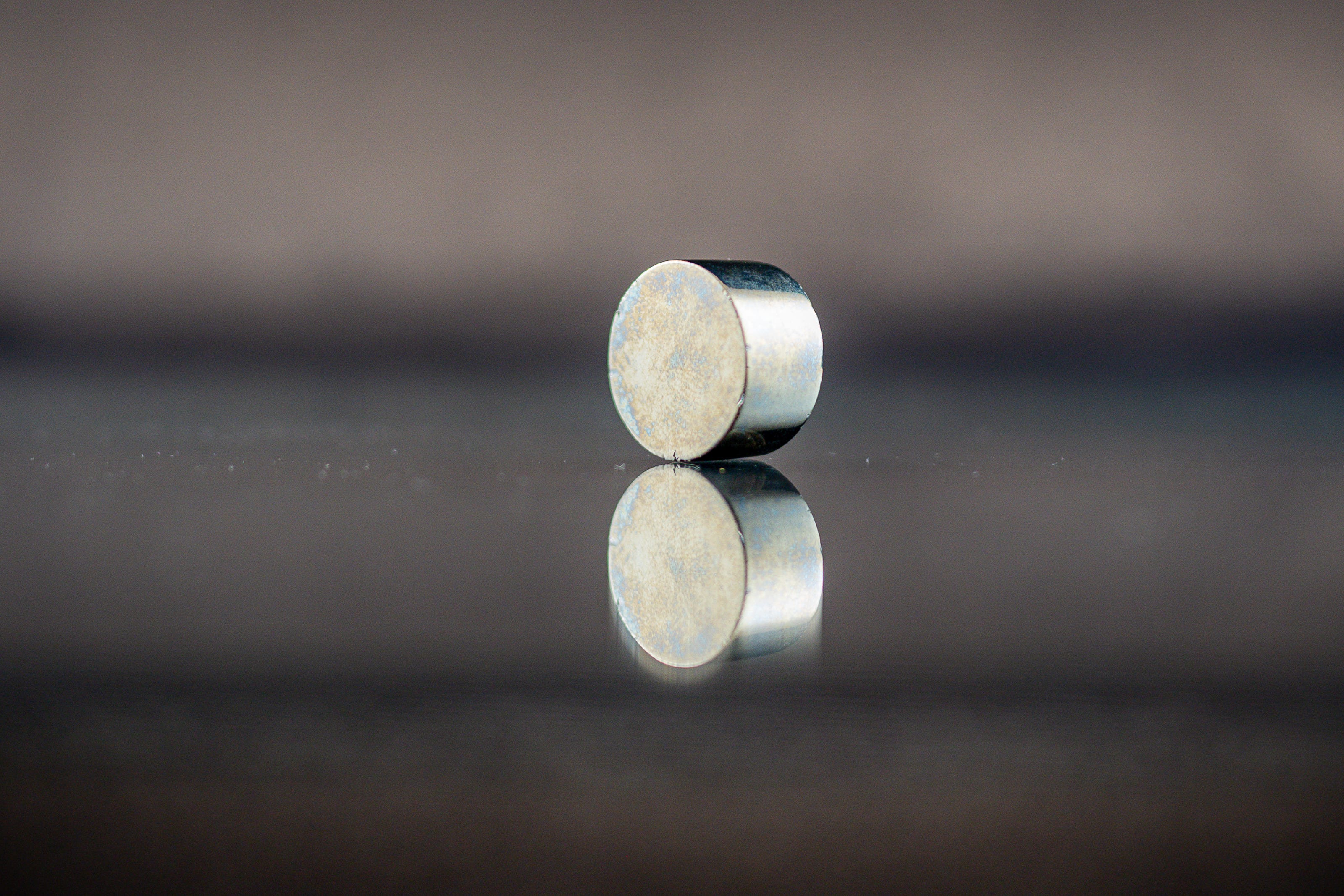
If you buy, make or finance anything with a chip, a lens, a lead-acid battery or a round of ammunition in it, three metals you’ve probably never priced are in your bill of materials. Gallium is in the power amplifiers of 5G phones and in the radars Raytheon builds for missile defense. Germanium is in telecom fiber glass and thermal weapon sights. Antimony is in battery alloys, flame retardants, solar glass and ammunition primers. China stopped licensing all three for U.S. buyers, then paused that. The pause is scheduled to expire Nov 27, 2026.
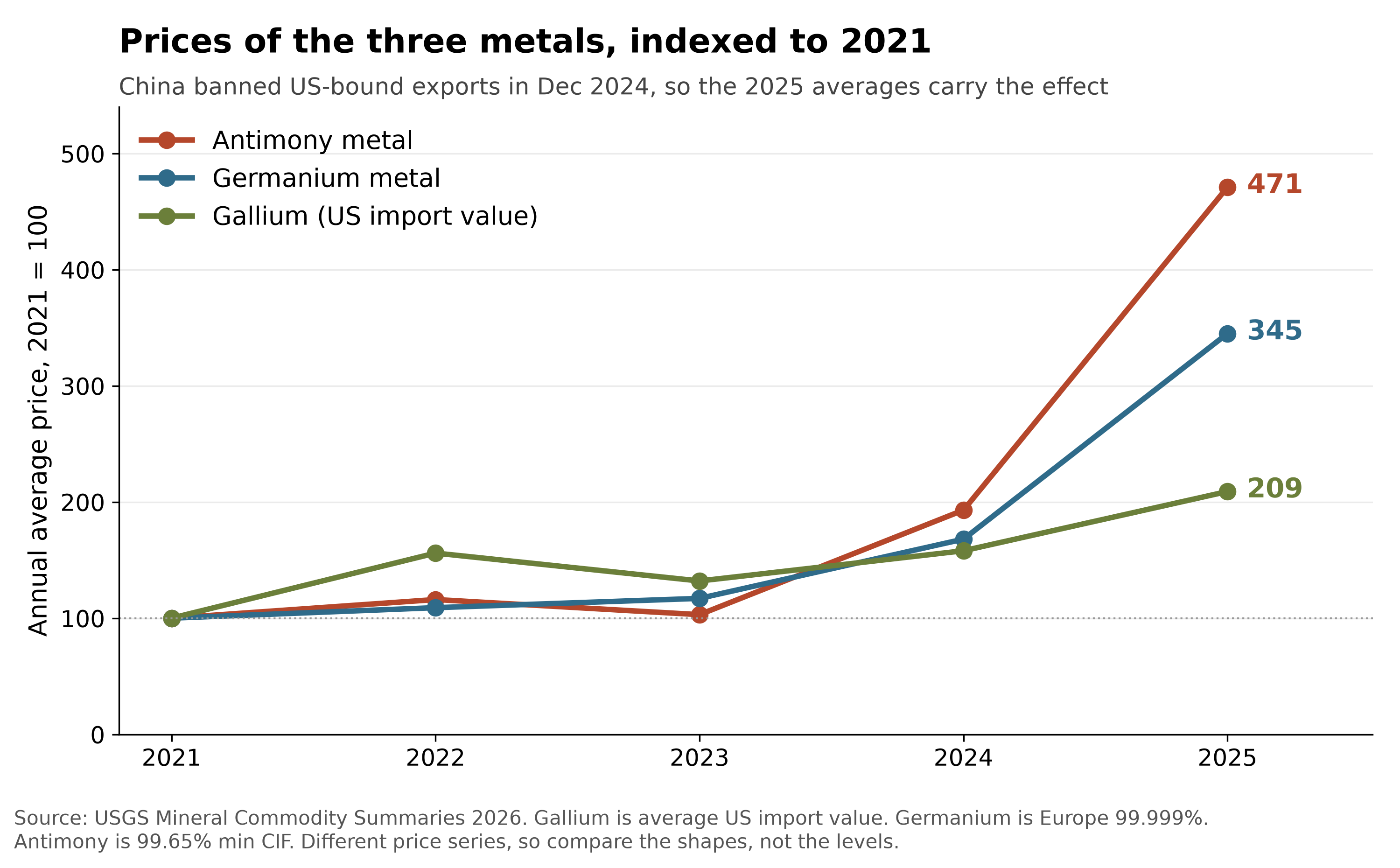
The earlier restrictions showed up in prices. On USGS annual averages, antimony metal went from $5.49 a pound in 2023 to $25 in 2025, and germanium metal nearly tripled, from $1,392 to $4,100 a kilogram. Reuters reported battery makers passing antimony costs to customers, and India’s Exide Industries blamed antimony for a weak quarter. I didn’t find a U.S. chip or ammunition line that shut down, just higher prices and thinner margins.
If you buy antimony for flame retardants, battery alloys or glass, you’re exposed directly. If you run a plant, your margin depends on how fast a price move passes through. If you own or lend to the business, I’d ask how many months of stock it holds and whether a second source is qualified.
I’ve been chasing one question: what actually changes on Nov 27? I don’t have a clean answer yet. As of Nov 11 I can’t find a notice extending the pause, so here are the pieces.
Where these metals show up
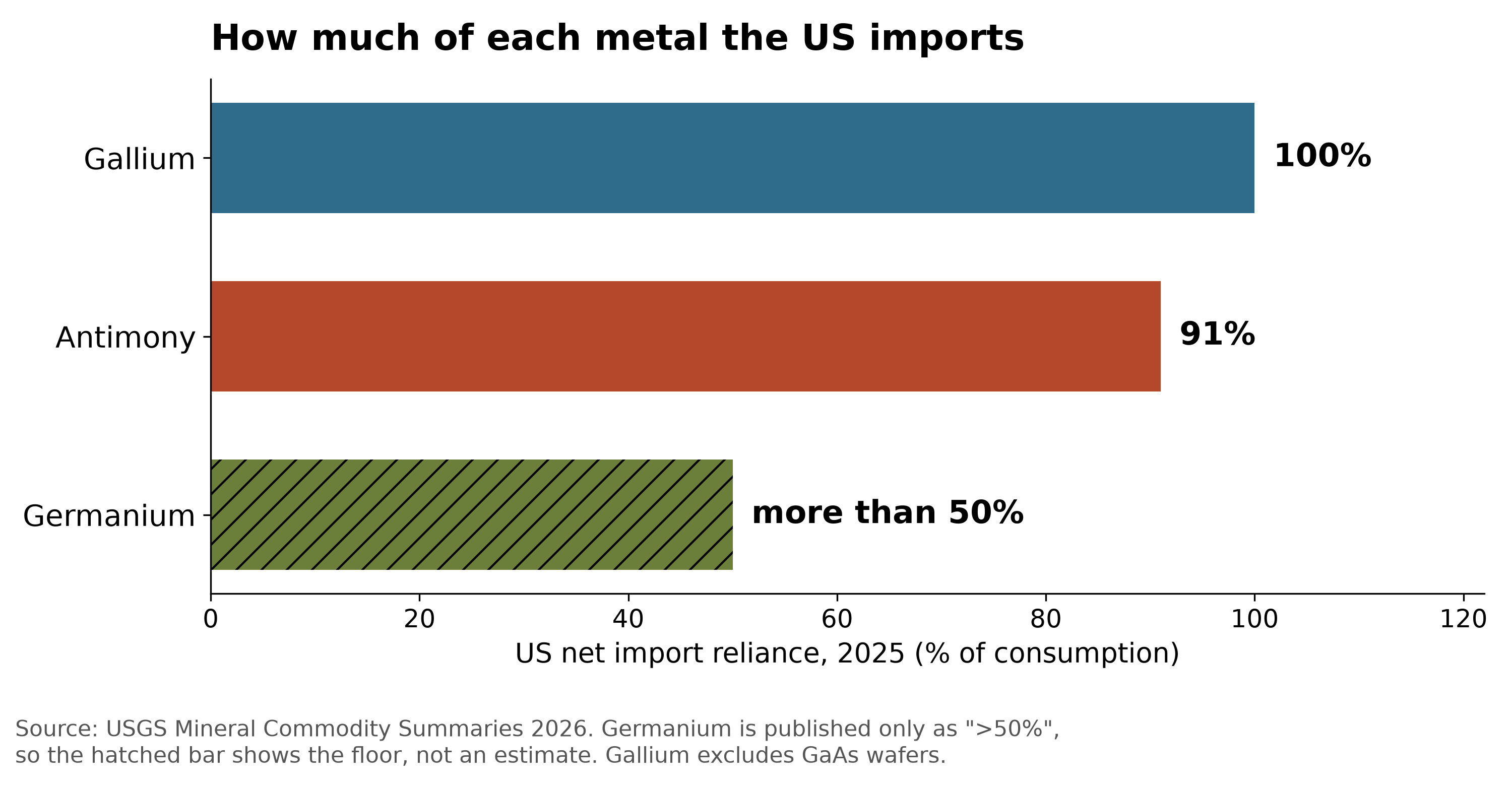
The U.S. imports 100% of its gallium, 91% of its antimony and more than half of its germanium, per USGS.
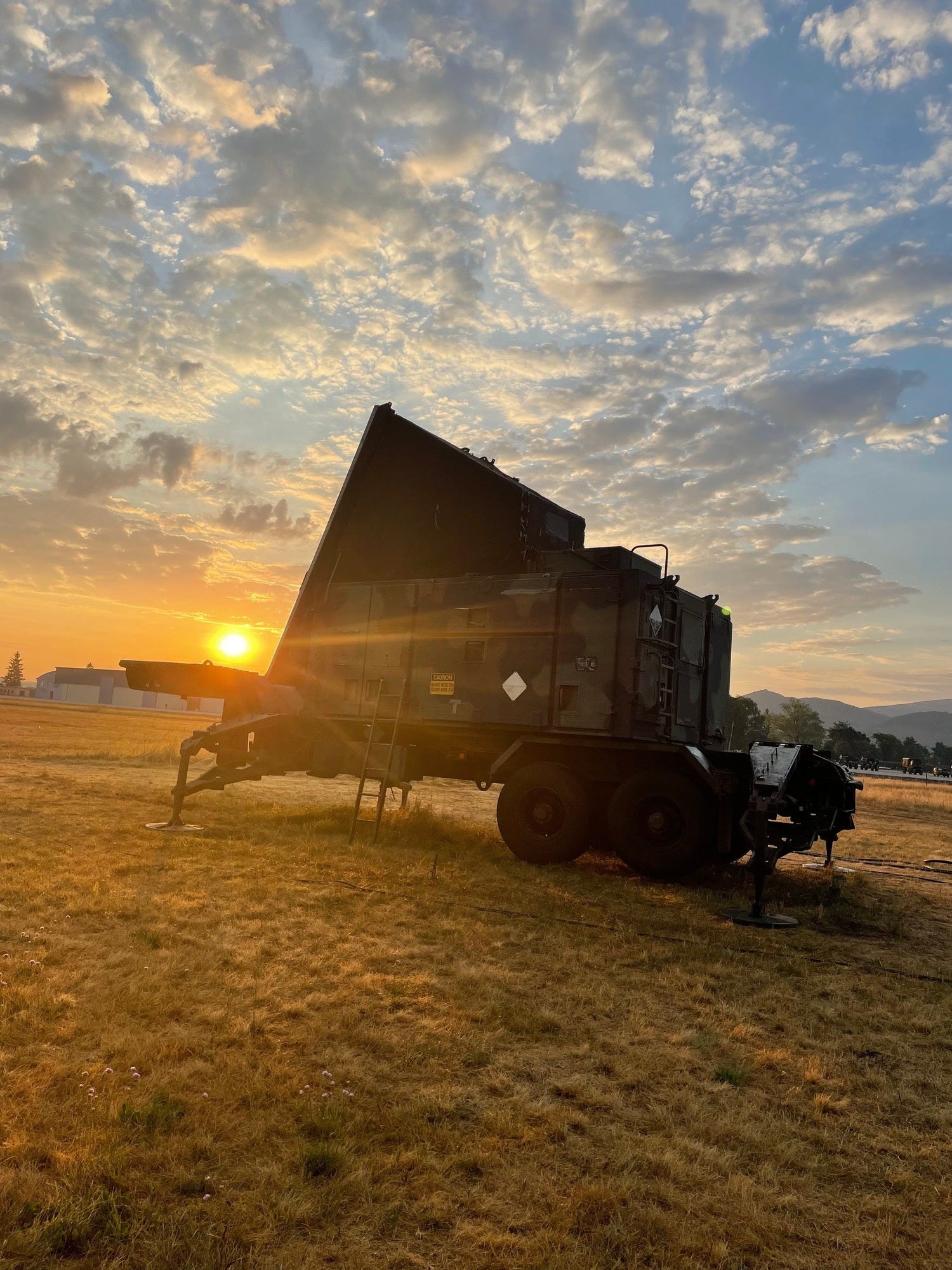
Gallium. In the U.S., 73% goes into integrated circuits, including defense electronics, and 26% into LEDs, lasers and similar parts. Examples are gallium arsenide amplifiers in Qorvo’s 5G phone modules and gallium nitride in Raytheon’s LTAMDS and GhostEye radars. Newer uses are EV chargers and AI data-center power supplies. I couldn’t find a share for those two.
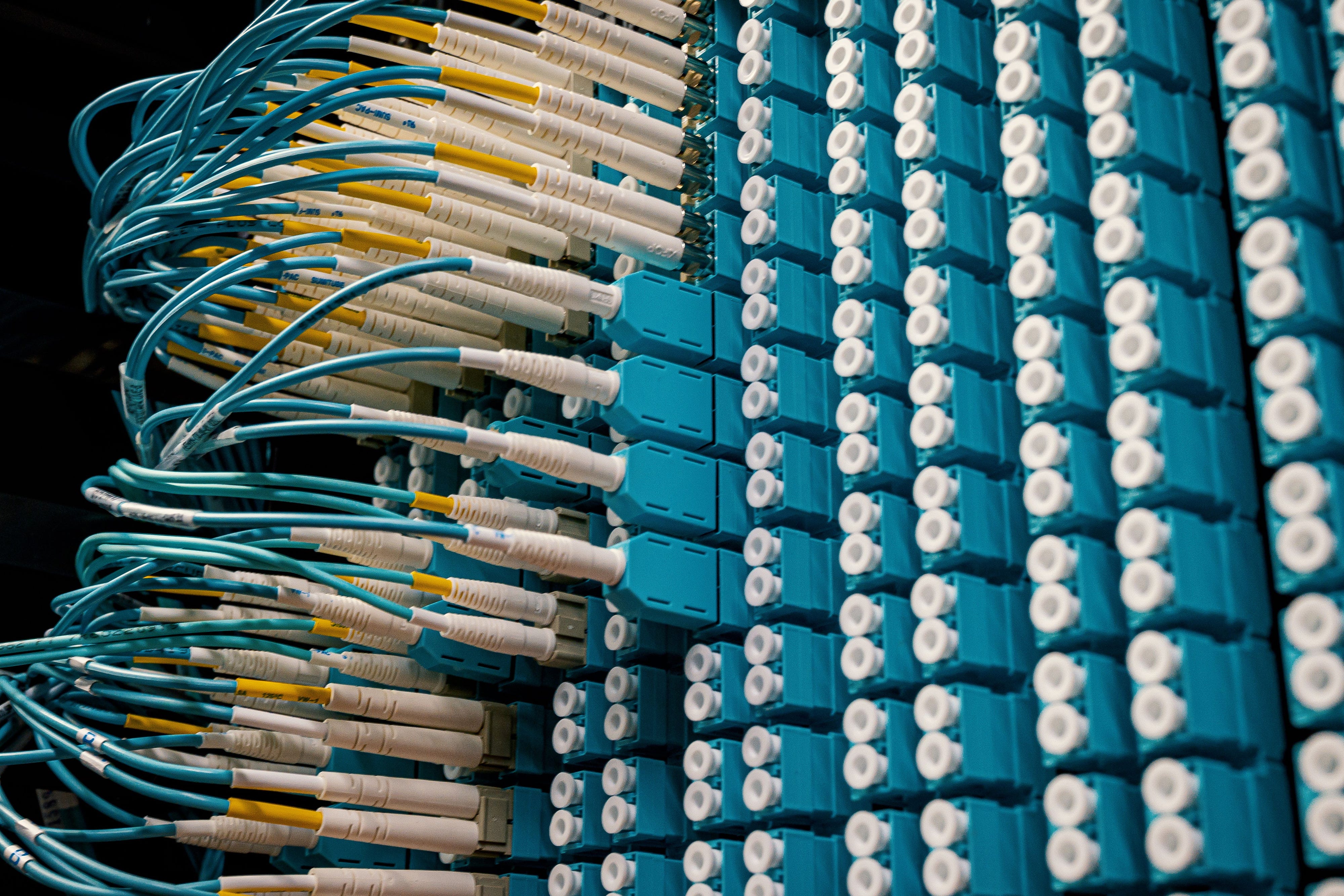
Germanium. S&P Global puts about 40% of global demand in fiber optics. Infrared optics, solar cells and electronics are most of the rest. The Pentagon lists thermal weapon sights and night vision among the defense uses.
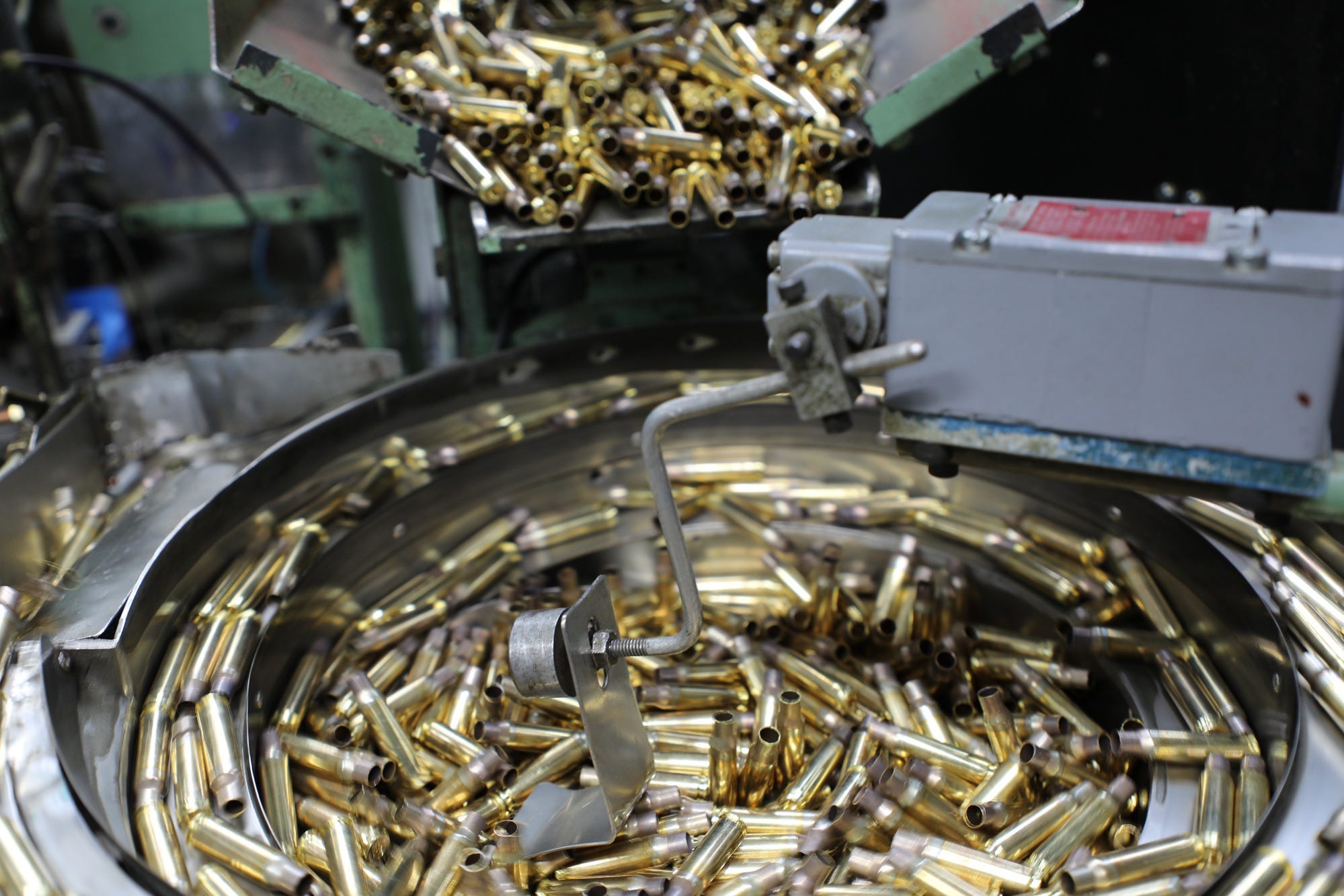
Antimony. USGS puts 49% of U.S. use in a bundled category it calls “metal products, including flame retardants,” and 40% in antimonial lead and ammunition. Globally, S&P Global has 31% in lead-acid batteries, 26% in flame retardants and 23% in solar glass. The Army needs antimony trisulfide for ammunition primers.
USGS says gallium arsenide and gallium nitride have no effective substitutes in many defense uses. CSIS cites an expert estimate of about 77 kilograms of gallium in one THAAD battery.
What got paused
The ban was paused, not lifted. Beijing started requiring export licenses for gallium and germanium in August 2023, and for antimony in September 2024, according to Reuters. On Dec 3, 2024, a day after Washington tightened chip export controls, the Commerce Ministry issued Notice No. 46. Its first part bars dual-use exports to U.S. military users. Its second says gallium, germanium, antimony and superhard materials won’t, in principle, be permitted to go to the U.S.
On Nov 9, 2025, soon after the Trump and Xi meeting in South Korea, China suspended the second part until Nov 27, 2026, in Announcement No. 72. Only the second part. The military ban stays. So does the license requirement, which never went away.
What the pause did
Less than the headline suggests, at least for gallium.
China’s exports of unwrought gallium fell 94% in 2025 and hadn’t recovered by May 2026.
CSIS looked at the customs data this spring. China’s exports of unwrought gallium fell 94% in 2025 from 2024 levels and hadn’t recovered in 2026 when CSIS wrote in May. Fastmarkets spot gallium outside China hit a record $1,850 a kilogram in April 2026, up more than 200% since the start of 2025. A gallium arsenide substrate maker said in its Q4 2025 report that no permits for its U.S. customers had been approved yet. The U.S. did import more gallium last year, but CSIS says it came mostly from countries that recycle chip-factory scrap and don’t mine gallium, so it still leans on Chinese supply upstream.
Germanium looks similar. USGS estimates U.S. imports of germanium metal fell 67% in 2025, to about 7 tons, because of the ban.
Antimony went differently. It averaged $25 a pound in 2025, more than double 2024, then cooled. A USGS outlook has spot near $12 at the end of April 2026. On Oct 14, Fastmarkets had Rotterdam at $18,300 to $19,000 a ton, about $8.30 to $8.60 a pound by my conversion. A trader called it a stalemate. Those are different price series, so treat that as direction, not a precise drop.
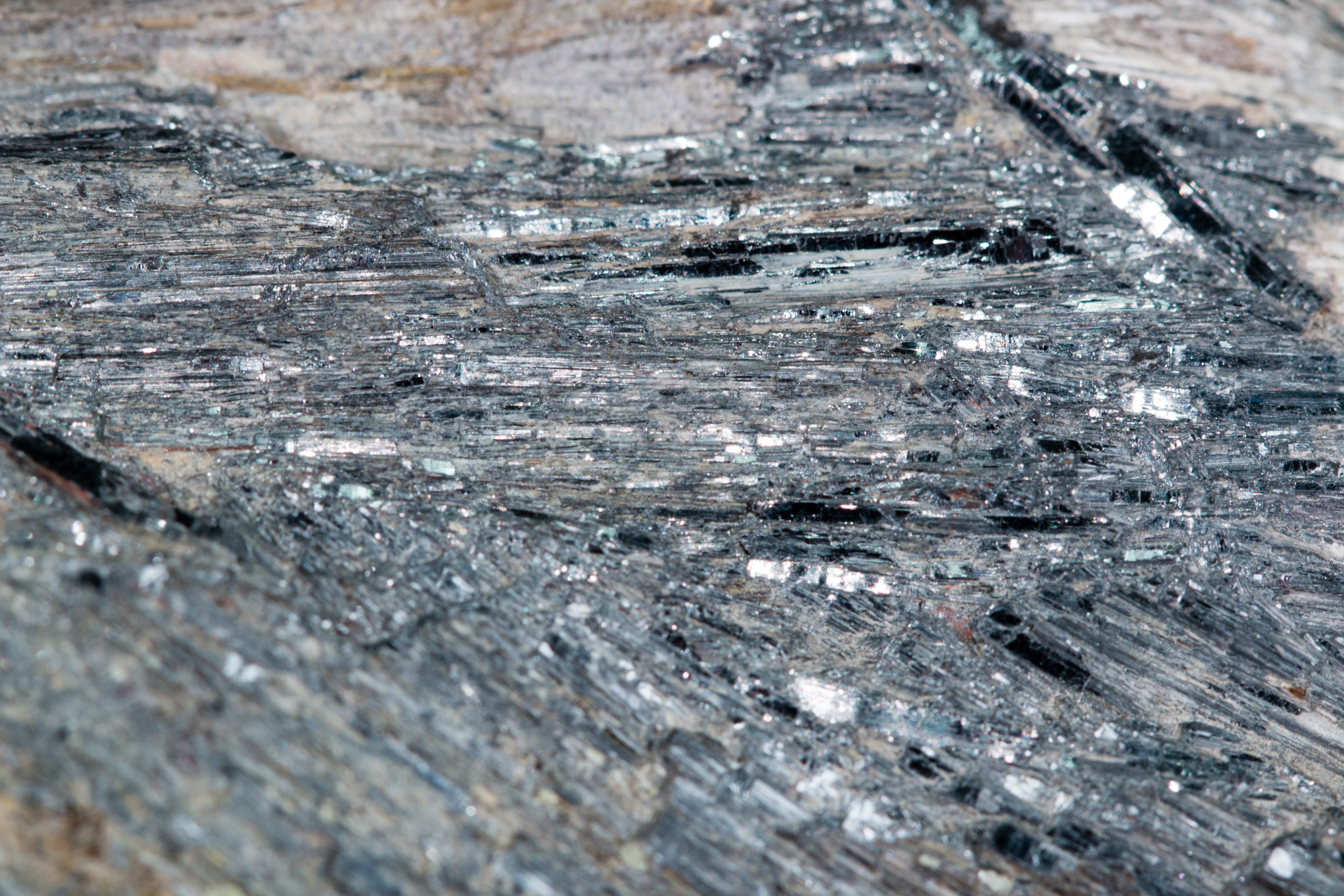
My guess, and I might be wrong, is that antimony has more places to come from. USGS estimates Russia and Tajikistan mined 32,000 and 22,000 tons in 2025, next to China’s 40,000. They aren’t all friendly suppliers, but they exist. Gallium has one real source: USGS puts China at 99% of primary supply.
Why gallium is stuck
Gallium and germanium are byproducts. Gallium comes out of refining bauxite into alumina, and bauxite carries about 50 parts per million, or 50 grams in a metric ton of rock. Germanium is tied to zinc ores. To get either one outside China, someone has to add a step to a running refinery, and that step has to pay for itself. The U.S. hasn’t recovered primary gallium since 1987.
What comes back on Nov 27
If Beijing publishes nothing, the second part of Notice No. 46 is back in force, and the presumption becomes no licenses for U.S.-bound gallium, germanium and antimony.
Here’s where I got tripped up. On Nov 9, the ministry and Customs kept six other measures suspended until Jan 10, 2027. That sounds like the whole truce got extended. It didn’t, quite. As the trade journal Skillings Mining Review noted, the notice doesn’t mention the gallium, germanium and antimony suspension, and as of Nov 11 I can’t find any notice extending it. The ministry said in September it expects both sides to seek a further extension of the broader truce by year end. A stated hope isn’t a signed notice.
Who’s building the replacement
More than I expected, and none of it’s running yet.
Gallium, Australia. On July 14, Alcoa and the Australian, Japanese and U.S. governments took a final investment decision on a gallium plant at Wagerup. Australia puts capacity at 100 tons a year, about 10% of global demand. Construction starts after site preparation.
All three, Tennessee. Commerce awarded $210 million to a Korea Zinc subsidiary for a $6.6 billion smelter in Clarksville that would produce all three, among other metals. Operation is expected by 2029.
Germanium and antimony, Canada. Teck and the Canada Growth Fund signed an agreement on July 7 for up to $400 million toward an expansion that could double Trail’s germanium and antimony capacity. It still needs final paperwork.
Antimony, Idaho. Perpetua announced on May 21 that EXIM’s board unanimously approved a $2.9 billion loan for its Stibnite project, the only U.S. antimony reserve USGS shows. The loan is available only after final documentation, which Perpetua expects in the second half of 2026.
CSIS expects the new gallium projects to reach full operation no sooner than mid-2027, “at best.”
Pay for the order, not the building
I haven’t found a buyer signing a multi-year purchase at a price that pays back.
In October I wrote that I’d start by mapping the precursors under each critical drug, chip and munition, then pay for the order, not the building. These metals are a live test.
Look at that list. Almost every item is money for a building. Teck’s agreement includes Canadian government offtake rights for part of the output, the closest thing to an order, but it isn’t a signed, priced purchase yet. I haven’t found a buyer signing a multi-year purchase at a price that pays back.
Antimony shows why that matters. Say you underwrote a new antimony mine on 2025 prices, when the metal averaged $25 a pound. Spot was near $12 in April. A loan covers construction. It doesn’t cover a customer who’ll pay a U.S. premium once cheaper supply is back. Stibnite is less exposed, since Perpetua says its economics are underpinned by gold. I could see the same problem with gallium when Wagerup and Tennessee come online.
So the boring work comes first. For any chip, lens or round, find where these metals sit in the bill of materials and how many months of stock exist.
What I’m watching
Nov 18 to 19, 2026. Trump and Xi are set to meet at the APEC summit in Shenzhen. SCMP reports the major deliverables are expected to wait for the G20.
Nov 27, 2026. The suspension in Announcement No. 72 is scheduled to end. I’ll check the ministry’s announcements page that morning and the days before.
By year end. Perpetua said in May it expects to finish the EXIM loan paperwork in the second half of 2026. Whether that happens tells me if approved money becomes a funded mine.
Jan 10, 2027. The six other measures come back unless they’re extended again. I’m watching whether gallium, germanium and antimony get folded into that date.
Where I might be wrong
Beijing could extend the pause next week and this piece becomes a lesson in over-reading a date. Gallium is also a tiny market, under a thousand tons a year worldwide, so a few shipments can move prices, and mislabeled shipments muddy the trade data. And my two antimony prices come from different series, so the drop is a direction, not a number.
If you buy or make with any of these three, what are you seeing on lead times? Has a supplier gone quiet, or has anyone qualified a second source? Challenge me.
Curiously Optimistic is where I work through the chemistry under the real economy and the deals it creates. I’m Bob Girton, and I run August Grace Advisory, where I advise on specialty chemical and materials transactions. Company names here are evidence, not recommendations. Nothing here is investment advice.
Related: The Real Economy Is Rebuilding. Chemicals Are Paying for It. (Nov 5) and We Reshored the Buildings (Oct 14).